Hand & Wrist Surgery
The hand and wrist are among the most intricate structures in the body, comprising numerous bones, joints, ligaments, tendons, nerves, and blood vessels working together to enable fine motor function and grip strength. Prof. Bijayendra Singh provides expert diagnosis and treatment for the full spectrum of hand and wrist conditions, from common entrapment neuropathies to complex reconstructive procedures.
Common Hand & Wrist Conditions
Carpal Tunnel Syndrome
Compression of the median nerve at the wrist causes numbness, tingling, and weakness in the hand — a condition known as carpal tunnel syndrome. It is one of the most common nerve entrapment disorders and can significantly impair daily activities such as writing, typing, and gripping objects. Prof. Singh performs carpal tunnel release under local anaesthesia with excellent outcomes even in severe cases, providing rapid relief of symptoms and restoration of hand function.
Ganglion Cysts
Ganglion cysts are common benign lumps arising from joints or tendon sheaths, most frequently occurring on the dorsum of the wrist. They may fluctuate in size and can cause discomfort or a feeling of pressure. Treatment includes observation for asymptomatic cysts, aspiration in the clinic, or surgical excision for symptomatic, recurrent, or enlarging cysts. Prof. Singh's meticulous surgical technique ensures a low recurrence rate and an excellent cosmetic result.
Dupuytren's Contracture
Dupuytren's contracture is a progressive condition in which the palmar fascia thickens and contracts, causing one or more fingers — most commonly the ring and little fingers — to bend into the palm. This can severely limit hand function over time. Prof. Singh offers a range of treatments depending on severity, including needle fasciotomy, Xiapex (collagenase) injections, and open fasciectomy for advanced contractures, with careful attention to nerve preservation and rehabilitation.
Hand Arthritis
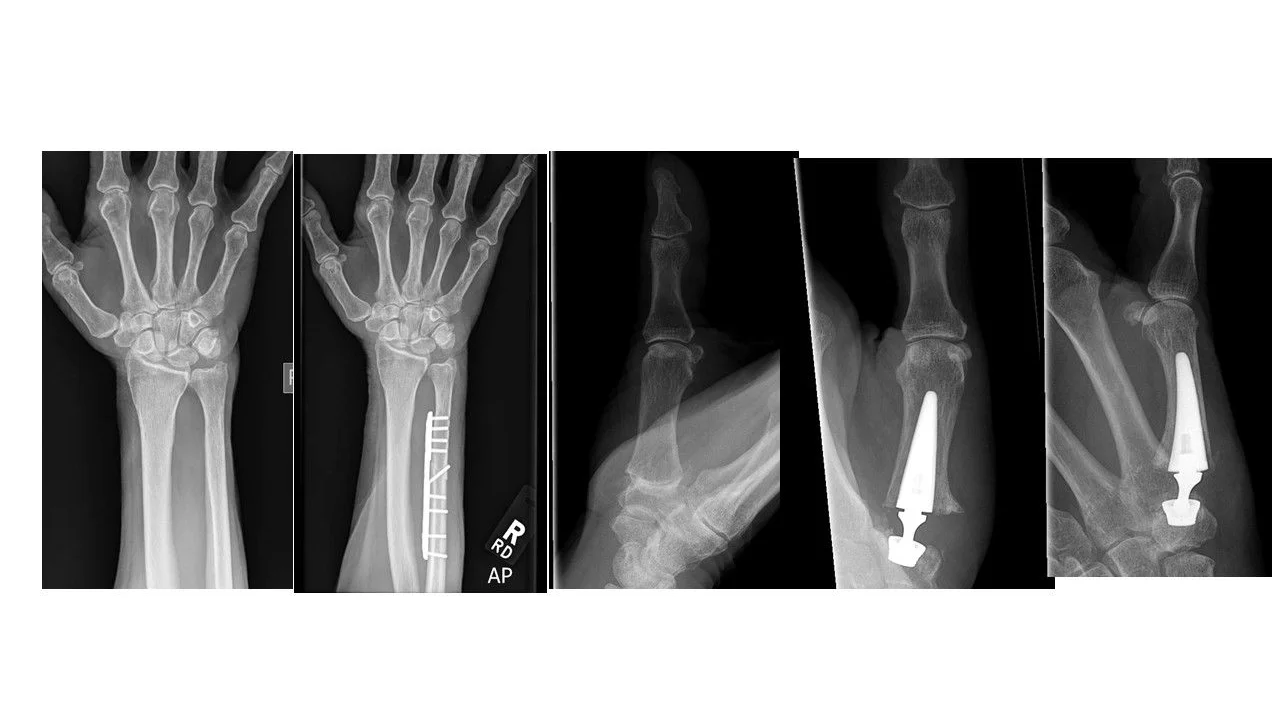
Osteoarthritis and rheumatoid arthritis frequently affect the small joints of the hand, including the basal thumb joint, knuckles, and finger joints, causing pain, stiffness, swelling, and deformity. Prof. Singh provides a comprehensive treatment pathway beginning with splinting, anti-inflammatory medication, and corticosteroid injections, progressing to joint replacement (arthroplasty) or joint fusion (arthrodesis) for advanced cases to relieve pain and improve function.
Trigger Finger
Trigger finger (stenosing tenosynovitis) occurs when a nodular thickening of the flexor tendon sheath causes the finger to lock or catch in a bent position, often with a painful snap on straightening. It is quickly and effectively resolved with a targeted steroid injection or, for persistent cases, a minimally invasive trigger finger release performed through a tiny incision under local anaesthetic.
Wrist Ligament Injuries
Injuries to the scapholunate or lunotriquetral ligaments — often resulting from a fall onto an outstretched hand — can cause carpal instability, persistent wrist pain, and reduced grip strength. Prof. Singh performs diagnostic wrist arthroscopy to accurately assess ligament injuries and offers arthroscopic ligament repair and reconstruction techniques to restore carpal alignment and stability.
Hand Trauma
Fractures of the hand and wrist, tendon lacerations (such as mallet finger, boutonnière deformity, and flexor tendon injuries), nerve injuries, and crush injuries require meticulous surgical management to restore function and prevent long-term disability. Prof. Singh provides acute trauma care including open reduction and internal fixation (ORIF), tendon repair, microsurgical nerve repair, and late reconstruction for neglected or complex injuries.
Surgical Approaches
Prof. Bijayendra Singh employs both minimally invasive and open surgical techniques tailored to each patient's specific condition and anatomy. Many hand and wrist procedures can be performed under local or regional anaesthesia as day-case surgery, minimising disruption to the patient's life. Whenever possible, Prof. Singh prefers endoscopic or arthroscopic techniques to reduce scarring, post-operative pain and recovery time. All surgery is performed with the aid of high-resolution magnification and microsurgical instruments to ensure the utmost precision in the delicate tissues of the hand and wrist.
Each patient receives a thorough assessment comprising clinical examination, appropriate imaging (X-ray, ultrasound, MRI), nerve conduction studies where indicated, and a detailed discussion of all treatment options including expected outcomes and recovery timelines. Prof. Singh works closely with hand therapists, radiologists, and pain specialists to provide seamless multidisciplinary care from diagnosis through rehabilitation.