CUBITAL TUNNEL SYNDROME
This leaflet provides general information to help you understand Cubital Tunnel Syndrome and the available treatment options.
Not everyone with cubital tunnel syndrome needs surgery.
At the heart of my practice is Shared Decision-Making. Whether we pursue conservative management (Plan A) or surgical intervention (Plan B), the goal is to create a tailored treatment plan that aligns with your lifestyle, values, and functional goals.
This leaflet provides general information and does not replace individual medical advice.
Anatomy of the Elbow
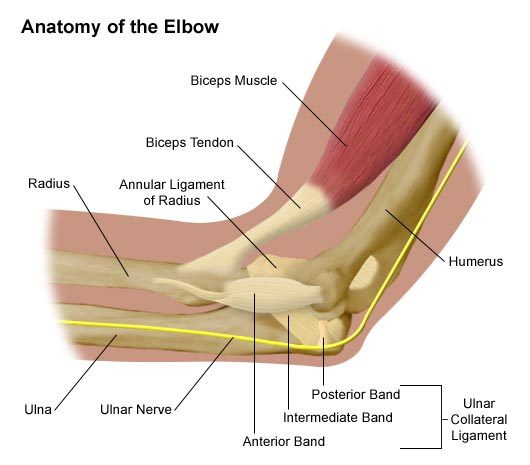
The elbow is a hinged joint connecting the upper arm to the forearm, relying on several structures for stability and movement. The joint connects:
- Humerus — upper arm bone
- Radius and Ulna — forearm bones
Stability
Maintained by the shape of the bones and collateral ligaments on each side.
Nerve Considerations
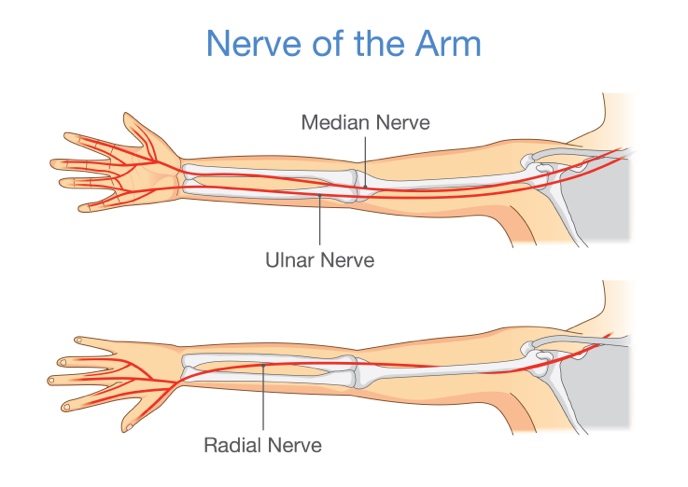
- The ulnar nerve runs behind the inner elbow (medial epicondyle).
- Bone spurs (osteophytes) can compress this nerve, causing numbness, tingling, or weakness in the ring and little fingers.
What Is Cubital Tunnel Syndrome?
Cubital tunnel syndrome occurs when the ulnar nerve (commonly known as the "funny bone" nerve) becomes compressed or irritated as it passes through the "tunnel" on the inner side of your elbow.
This nerve is a major "electrical cable" for your arm. It provides sensation to your little and ring fingers and controls 15 of the 20 small muscles in your hand that are essential for fine, intricate movements.
Common Problems & Presentation
The ulnar nerve stretches and moves every time you bend your arm, making it highly susceptible to irritation:
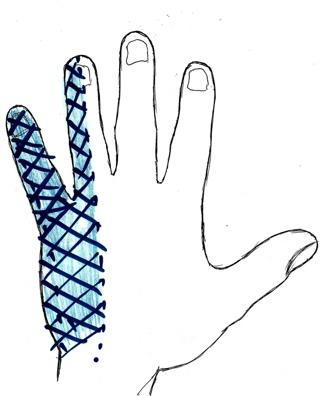
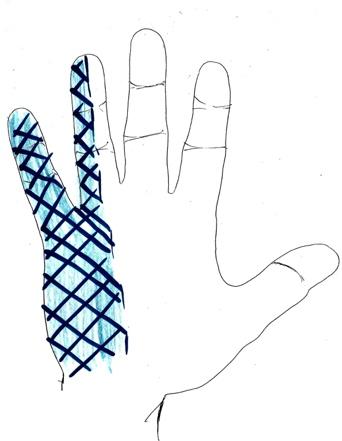
- Numbness & Tingling: typically in the little finger and the half of the ring finger closest to it.
- Forearm Ache: a dull, nagging pain on the inner side of the forearm.
- Hand Clumsiness: difficulty with fine motor tasks such as buttons, shoelaces, or playing instruments.
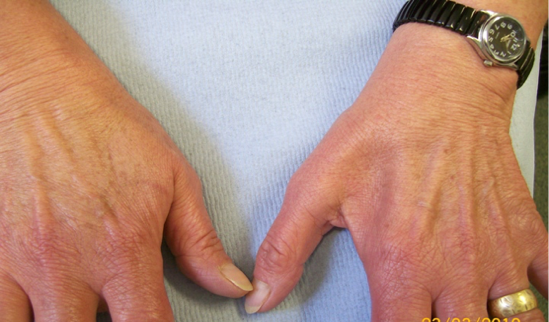
- Muscle Wasting: in advanced cases, the muscles in the hand may begin to shrink.
- The "Small Finger Sign": the little finger may drift away from the others and be hard to pull back in.
What Causes It?
- Idiopathic: often no specific cause is found — the nerve becomes irritated by normal elbow movement.
- Mechanical Pressure: prolonged leaning on the elbow or sleeping with elbows tightly bent.
- Anatomy: elbow arthritis, bone spurs, or previous fractures can narrow the tunnel.
- Repetition: frequent bending and straightening can cause the nerve to slide over the bone, leading to inflammation.
Area of numbness and tingling:
Diagnosis
Diagnosis is primarily based on clinical history and physical examination:
- Nerve Conduction Studies (NCS/EMG): the "gold standard" test, measuring how fast electrical signals travel down the nerve to pinpoint the blockage.
- X-rays: to check for arthritis or bone spurs that might be compressing the nerve.
- MRI of the Neck: occasionally requested to ensure the nerve isn't being pinched at the spine rather than the elbow.
Clinical examination — muscle wasting in advanced cases:
Conditions That Can Mimic Cubital Tunnel Syndrome
During your consultation, we perform specific tests to rule out other causes of arm and hand symptoms, such as:
- Referred Pain from the Neck: a pinched nerve in your neck can send "shooting" pains down into your elbow and hand.
- Nerve Entrapment at the Wrist: the ulnar nerve can also become compressed at the wrist (Guyon's canal), producing similar numbness and tingling.
- Joint Issues: wear and tear (arthritis) inside the elbow joint itself rather than the nerve.
- Radiating Pain: issues in the shoulder or carpal tunnel (wrist) can change the way you move, straining your elbow.
Treatment Options: A Shared Decision
I will discuss all available treatment options with you, explaining the benefits and risks of each. Your preferences, values, and lifestyle will be considered as we work together to create a treatment plan best suited to your needs — this shared decision-making process ensures you are fully informed and involved in your care.
Plan A — Non-Surgical
Many people improve with
- Activity Modification: avoid leaning on hard surfaces and limit prolonged elbow bending.
- Night Splinting: a soft support or "towel wrap" at night to prevent tight bending while you sleep.
- Nerve Gliding Exercises: specific movements to help the nerve slide smoothly through the tunnel.
- Elbow Padding: a soft pad worn during the day to protect the nerve from direct pressure.
Plan B — Surgical
Considered if non-surgical methods fail
- In-situ Decompression: the most common approach — the "roof" of the tunnel is released to give the nerve more space.
- Nerve Transposition: the nerve is moved from behind the bone to the front of the elbow, usually reserved for unstable nerves or a very stiff elbow.
Important Things to Remember
- Cubital Tunnel Syndrome is not dangerous
- Many people improve without surgery
- Surgery is optional
- Doing nothing is always an option
Questions You May Wish to Ask
- What treatments should I try first?
- How long should I try them for?
- What improvement can I expect?
- What happens if I choose not to have surgery?
Book or Enquire Directly at Each Site
| LIPS Healthcare London | 0203 870 9996 | singh.admin@lips.org.uk |
| Spire Alexandra Chatham | 01634 662866 | alexandraselfpaypsc@spirehealthcare.com |
| Practice Plus Gillingham | 01634 969045 | Private.gillingham@practiceplusgroup.com |