GANGLION CYST
This leaflet provides general information to help you understand ganglion cysts and the available treatment options.
Not everyone with a ganglion needs surgery.
At the heart of my practice is Shared Decision-Making. Whether we pursue conservative management (Plan A) or surgical intervention (Plan B), the goal is to create a tailored treatment plan that aligns with your lifestyle, values, and functional goals.
This leaflet provides general information and does not replace individual medical advice.
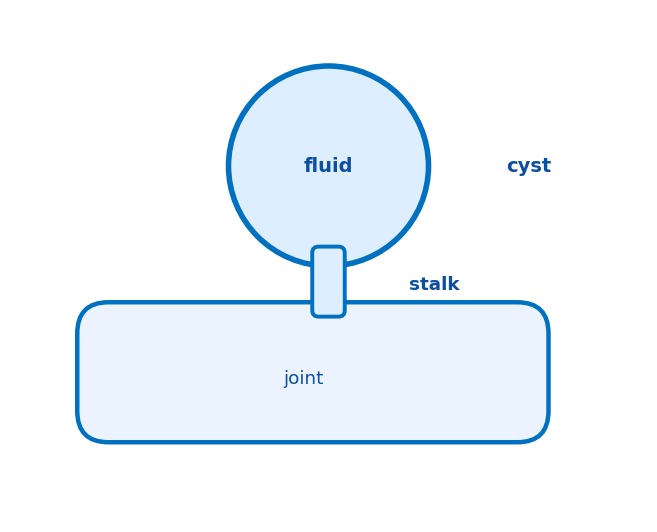
The Anatomy of a Ganglion
A ganglion is a fluid-filled lump that arises from a joint or tendon, relying on several structures working together.
How a Ganglion Forms
Think of it as a small balloon of fluid:
- Fluid leaks from a joint or tendon sheath
- It collects in a small sac under the skin
- A stalk connects the sac to the joint
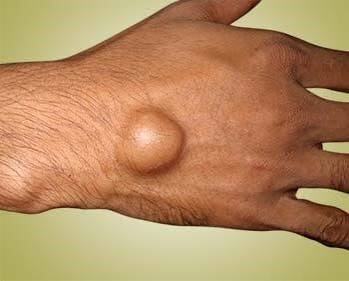
The Fluid
The sac contains a thick, jelly-like fluid, similar to the natural lubricant found inside your joints — it is not cancerous.
Where They Appear
Ganglions form near joints and tendons:
- Back of the wrist (the most common)
- Palm side of the wrist
- Base of a finger, on the tendon sheath
- Often changing in size over time
Good to Know
- They are non-cancerous and harmless
- About half disappear on their own
- They often change in size or come and go
- Pain occurs only if a nerve is pressed
The Result
Most cause only a visible lump, but larger cysts can make it uncomfortable to bend the wrist or grip, and some press on a nearby nerve.
What Is a Ganglion?
A ganglion is a non-cancerous, fluid-filled lump that commonly appears near joints or tendons, most often on the back of the wrist. It is like a small balloon of thick, jelly-like fluid, and it often changes in size — sometimes disappearing on its own.
Types of Ganglion
They vary by where they form:
- Dorsal wrist — the most common, on the back
- Palmar wrist — on the palm side, near the artery
- Flexor sheath — a pea-sized lump at a finger base
Who Gets Them
The exact cause is unknown, but they are:
- Most common between ages 15 and 40
- More frequent in women
- Common with repeated wrist stress
- Seen in gymnasts and manual workers
Symptoms & Examination
Symptoms
- A visible, usually firm and rounded lump
- Some stay hidden under the skin but still ache
- Pain or tingling only if a nerve is pressed
Examination
- The lump is felt and its size noted
- It often transilluminates (glows with light)
- Nearby nerves and pulse checked
Diagnosis
- Usually a clinical diagnosis from examination
- Ultrasound or MRI occasionally to confirm
Treatment Options: A Shared Decision
I will discuss all available treatment options with you, explaining the benefits and risks of each. Your preferences, values, and lifestyle will be considered as we work together to create a treatment plan best suited to your needs — this shared decision-making process ensures you are fully informed and involved in your care.
Treatment Depends On
- Whether the cyst is painful or growing
- Whether it presses on a nerve or artery
- How much it limits grip or wrist movement
- Your preferences and goals
Ganglions are harmless and about half disappear on their own within two years — if it isn't causing trouble, doing nothing is always an option.
Plan A — Non-Surgical
- Observation: often the best choice, as many settle on their own
- Reassurance: they are not cancerous and will not become so
- Aspiration: draining the fluid, though it often returns
- Suturing: a newer technique used with good success
Plan B — Surgical
Considered when…
- Painful: the cyst is very sore or tender
- Large: it limits grip or wrist movement
- Nerve Pressure: it presses on a nearby nerve
- Recurrence: it keeps coming back after draining
- Approach: open or keyhole day-case removal
- The Procedure: known as Ganglion Excision, the cyst and its stalk are removed to reduce the chance of return, usually under anaesthetic. A separate leaflet will be provided for the surgery.
Management Pathway

Red Flags — When to Seek Urgent Help
Rapid growth, a hot or red lump, or new numbness and weakness — seek assessment to rule out other causes.
If you experience any of the above, contact the practice, your GP, NHS 111, or attend your nearest Emergency Department.
Important Things to Remember
- A ganglion is not cancerous
- About half settle without any treatment
- They may change in size or come and go
- Doing nothing is always an option
Questions You May Wish to Ask
- What treatments should I try first?
- How long should I try them for?
- What improvement can I expect?
- What happens if I don't have surgery?
Book or Enquire Directly at Each Site
| LIPS Healthcare London | 0203 870 9996 | singh.admin@lips.org.uk |
| Spire Alexandra Chatham | 01634 662866 | alexandraselfpaypsc@spirehealthcare.com |
| Practice Plus Gillingham | 01634 969045 | Private.gillingham@practiceplusgroup.com |