INTERNAL IMPINGEMENT / THROWER'S SHOULDER / GLENOHUMERAL INTERNAL ROTATION DEFICIT (GIRD)
This leaflet provides general information to help you understand internal impingement of the shoulder and the available treatment options.
Not everyone with internal impingement needs surgery.
At the heart of my practice is Shared Decision-Making. Whether we pursue conservative management (Plan A) or surgical intervention (Plan B), the goal is to create a tailored treatment plan that aligns with your lifestyle, values, and functional goals.
This leaflet provides general information and does not replace individual medical advice.
The Anatomy of the Shoulder Joint
The shoulder is one of the most complex joints in the body, relying on several structures working together:
How the Shoulder Works
Three main bones form the joint:
- Humerus (upper arm bone)
- Clavicle (collarbone)
- Scapula (shoulder blade)
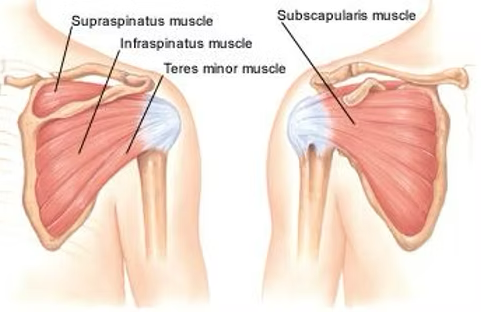
The Labrum (Stabilising Ring)
A rim of rubbery tissue that deepens the shallow shoulder socket — like a "bumper" or suction cup that keeps the joint stable and prevents dislocation.
The Rotator Cuff
Four deep muscles keep the ball centred in the socket and let you lift and rotate your arm:
- Supraspinatus
- Infraspinatus
- Subscapularis
- Teres Minor
The Four Key Joints
- Glenohumeral Joint – the main ball-and-socket joint
- Acromioclavicular (AC) Joint – collarbone meets shoulder blade
- Subacromial Space – tunnel above the rotator cuff
- Scapulothoracic Joint – shoulder blade glides over rib cage
The "Cushioning" (Articular Cartilage)
A smooth, slippery coating on the ball and socket surfaces that lets the bones glide over each other without friction, for pain-free movement.
What Is Internal Impingement?
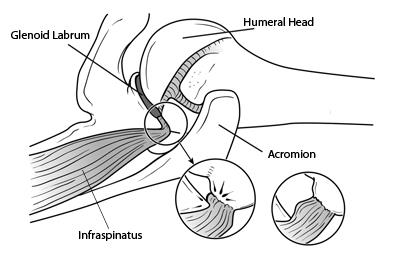
Internal impingement causes shoulder pain in young adults doing overhead activities. With the arm raised and rotated outwards, the greater tuberosity of the ball repeatedly contacts the back-top rim of the socket — pinching the deep surface of the rotator cuff and often damaging the labrum.
Who Gets It?
Typically young, overhead athletes:
- Weightlifters – bench press and power lifting
- Racquet sports, rugby and throwing athletes
- Overhead workers such as builders
What Causes It?
A repetitive mechanical problem:
- Repeated overhead motion of the arm
- Contact between the ball and the back of the socket
- Irritation of the deep rotator cuff surface
- Often associated labral damage (SLAP)
Symptoms & Examination
Symptoms
- Pain with overhead activity and throwing
- Weakness in abduction and external rotation
- A feeling of instability in some cases
Examination
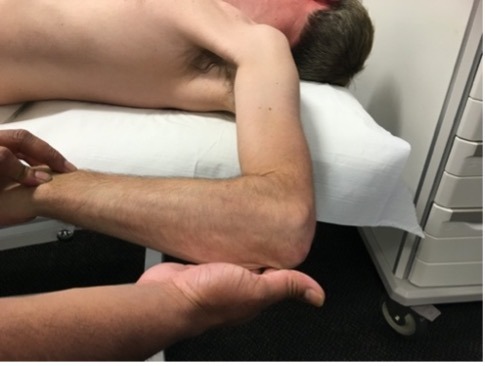
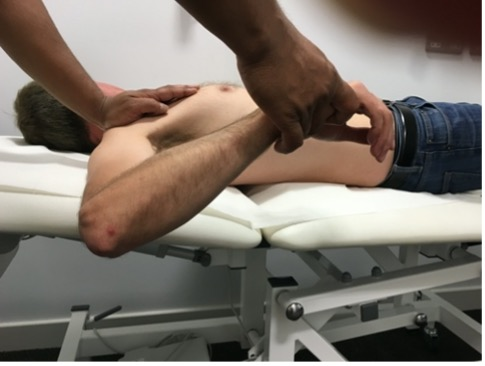
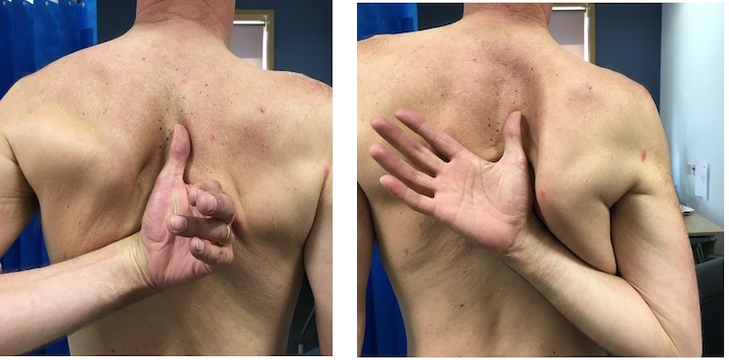
- Reduced internal rotation, tested lying flat
- Comparison with the unaffected side
- Usually diagnosed on clinical examination

Diagnosis
- X-rays – bony changes or abnormalities
- MRI / MR arthrogram – cuff and labral damage (e.g. SLAP)
Clinical assessment of shoulder rotation:
Treatment Options: A Shared Decision
I will discuss all available treatment options with you, explaining the benefits and risks of each. Your preferences, values, and lifestyle will be considered as we work together to create a treatment plan best suited to your needs — this shared decision-making process ensures you are fully informed and involved in your care.
Treatment Depends On
- Your sport and training pattern
- Degree of cuff and labral involvement
- Response to rehabilitation
- Your goals for return to sport
Good News
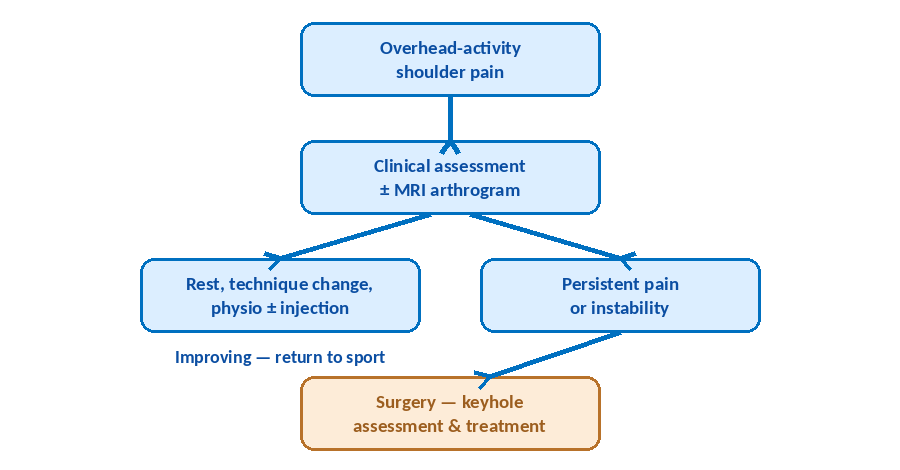
Most internal impingement settles with rest, technique change and focused rehabilitation — surgery is not needed for everyone.
Plan A — Non-Surgical
Early and mild cases improve with
- Rest: and activity modification
- Pain Control: regular painkillers in the early stages
- Physiotherapy: stretching and strengthening programme
- Injection: ultrasound-guided – relief, and aids the diagnosis
Plan B — Surgical
Considered when…
- Persistent Pain: or instability despite rehabilitation
- Daily Life: symptoms affecting activities or sport
- Rehab: non-surgical treatment has not been successful
- Approach: keyhole assessment and treatment
- Details: explained fully in a separate leaflet
- The Procedure: usually keyhole (arthroscopic) surgery to address the damaged cuff surface and any labral (SLAP) injury. A separate leaflet will be provided for the surgery.
Management Pathway
Red Flags — When to Seek Urgent Help
Sudden loss of strength after an injury, or a hot swollen shoulder with fever — seek prompt assessment.
If you experience any of the above, contact the practice, your GP, NHS 111, or attend your nearest Emergency Department.
Important Things to Remember
- Common in weightlifters and overhead athletes
- Many people improve without surgery
- Technique and training changes are part of treatment
- Doing nothing is always an option
Questions You May Wish to Ask
- What treatments should I try first?
- How long should I try them for?
- What improvement can I expect?
- What happens if I don't have surgery?
Book or Enquire Directly at Each Site
| LIPS Healthcare London | 0203 870 9996 | singh.admin@lips.org.uk |
| Spire Alexandra Chatham | 01634 662866 | alexandraselfpaypsc@spirehealthcare.com |
| Practice Plus Gillingham | 01634 969045 | Private.gillingham@practiceplusgroup.com |