STIFF ELBOW
This leaflet provides general information to help you understand Stiff Elbow and the available treatment options.
Not everyone with stiff elbow needs surgery.
At the heart of my practice is Shared Decision-Making. Whether we pursue conservative management (Plan A) or surgical intervention (Plan B), the goal is to create a tailored treatment plan that aligns with your lifestyle, values, and functional goals.
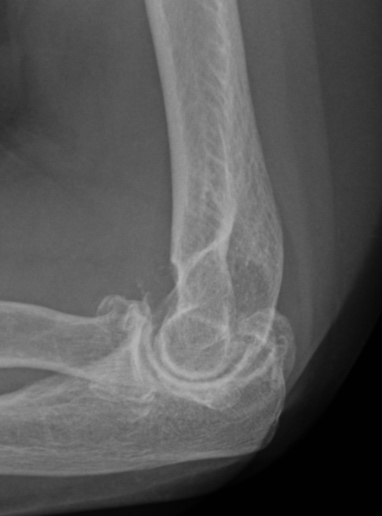
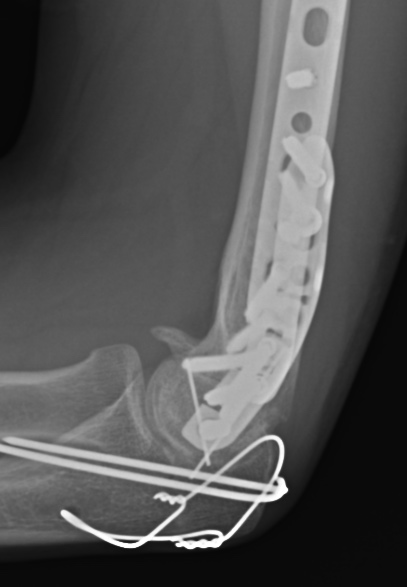
This leaflet provides general information and does not replace individual medical advice.
Anatomy of the Elbow
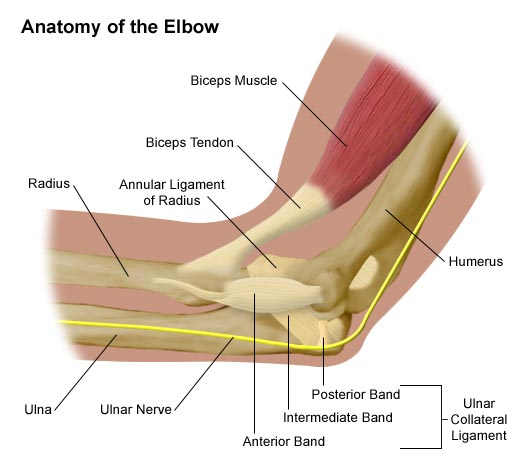
The elbow is a hinged joint connecting the upper arm to the forearm, relying on several structures for stability and movement. The joint connects:
- Humerus — upper arm bone
- Radius and Ulna — forearm bones
Stability
Maintained by the shape of the bones and collateral ligaments on each side.
Nerve Considerations
- The ulnar nerve runs behind the inner elbow (medial epicondyle).
- Bone spurs (osteophytes) can compress this nerve, causing numbness, tingling, or weakness in the ring and little fingers.
Understanding the Condition
The elbow is a complex hinge joint where the humerus (upper arm bone) meets the radius and ulna (forearm bones). To function smoothly, the ends of these bones are coated in articular cartilage — a slippery, rubbery material that cushions the joint and reduces friction.
The entire joint is encased in a joint capsule. When the capsule thickens or the bone shape changes, the elbow becomes stiff, making it difficult to perform basic tasks like reaching your face or dressing.
Why Does the Elbow Become Stiff?
Stiffness is usually caused by either soft tissue contracture (the capsule and ligaments becoming tight and scarred) or bony blocks (bone spurs or fragments physically stopping movement):
- Post-Traumatic: following a fracture, dislocation, or improper healing (mal-union).
- Arthritis: age-related wear (osteoarthritis) or inflammatory conditions like rheumatoid arthritis can cause bone spurs and joint narrowing.
- Infection: septic arthritis can cause rapid damage to the joint lining and lead to severe scarring.
- Post-Surgical: scar tissue can sometimes form after an operation, restricting the joint's natural glide.
Common Symptoms
- Reduced Range of Motion: difficulty fully straightening or bending the arm.
- Pain: particularly when trying to "force" the elbow into an end-range position.
- Mechanical Symptoms: locking, clicking, or a "clunking" sensation within the joint.
- Nerve Symptoms: numbness or tingling in the ring and little fingers (ulnar nerve) if stiffness is associated with swelling or bone spurs.
Diagnosis
I will assess your range of motion and identify exactly where the "block" is occurring:
- X-rays: to check for bone spurs, loose bodies, or joint space narrowing.
- CT/MRI Scans: often used before surgery to create a "map" of the bone and soft tissue, allowing for a more precise surgical plan.
Treatment Options: A Shared Decision
I will discuss all available treatment options with you, explaining the benefits and risks of each. Your preferences, values, and lifestyle will be considered as we work together to create a treatment plan best suited to your needs — this shared decision-making process ensures you are fully informed and involved in your care.
Plan A — Non-Surgical
- Physical Therapy: the most critical first step — specific stretching and strengthening routines can often "loosen" a tight joint capsule.
- Activity Modification: learning to perform tasks in ways that do not aggravate the joint.
- Corticosteroid Injections: to reduce inflammation and "quieten" a painful joint, often making physical therapy more effective.
Plan B — Surgical
Considered if physical therapy doesn't restore enough movement
- Elbow Arthroscopy: a minimally invasive keyhole approach to remove loose bodies, smooth joint surfaces, and release tight tissue — typically a day-case procedure.
- Open Release: for very severe or complex stiffness, using one or two small incisions to gain better access and safely restore motion.
Important Things to Remember
- Many people improve without surgery
- Surgery is optional
- Doing nothing is always an option
Questions You May Wish to Ask
- What treatments should I try first?
- How long should I try them for?
- What improvement can I expect?
- What happens if I choose not to have surgery?
Book or Enquire Directly at Each Site
| LIPS Healthcare London | 0203 870 9996 | singh.admin@lips.org.uk |
| Spire Alexandra Chatham | 01634 662866 | alexandraselfpaypsc@spirehealthcare.com |
| Practice Plus Gillingham | 01634 969045 | Private.gillingham@practiceplusgroup.com |