CARPAL TUNNEL SYNDROME
This leaflet provides general information to help you understand carpal tunnel syndrome and the available treatment options.
Not everyone with carpal tunnel syndrome needs surgery.
At the heart of my practice is Shared Decision-Making. Whether we pursue conservative management (Plan A) or surgical intervention (Plan B), the goal is to create a tailored treatment plan that aligns with your lifestyle, values, and functional goals.
This leaflet provides general information and does not replace individual medical advice.
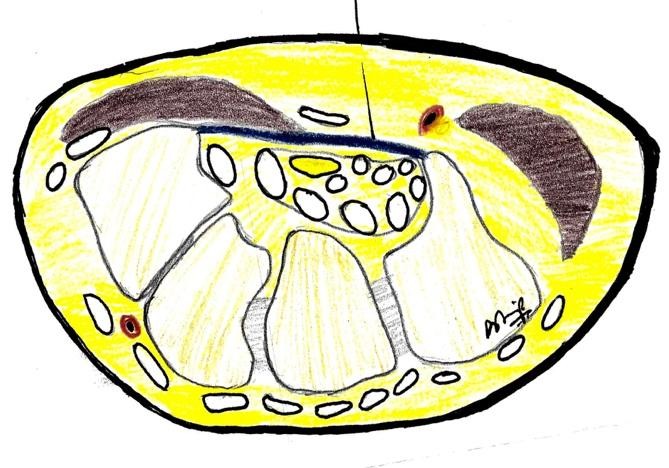
The Anatomy of the Wrist & Carpal Tunnel
The carpal tunnel is a narrow passage at the front of the wrist where the nerve and tendons pass into the hand, relying on several structures working together.
How the Carpal Tunnel Works
A tight passage carries these structures:
- Median nerve — the main nerve to the hand
- Nine flexor tendons — bend the fingers and thumb
- Transverse carpal ligament — the firm roof

The Median Nerve
Works like an electric cable — it carries feeling from the thumb, index, middle and half the ring finger, and powers the small muscles at the base of the thumb.
What Passes Through
The tunnel is crowded, sharing one tight space:
- The median nerve
- Tendons that bend the fingers
- The tendon that bends the thumb
- Wrapped in a slippery lining (synovium)
The Walls of the Tunnel
- Floor and sides — the small carpal (wrist) bones
- Roof — the thick transverse carpal ligament
- The ligament cannot stretch to make room
- So swelling inside quickly raises the pressure
The Lining (Synovium)
A slippery membrane wraps the tendons so they glide smoothly. If it swells, the tunnel becomes crowded and the median nerve is squeezed.
What Is Carpal Tunnel Syndrome?
Carpal tunnel syndrome occurs when the median nerve is squeezed as it passes through the tunnel at the wrist. Symptoms range from mild tingling to constant numbness — and how severe the nerve tests are does not always match how the hand feels.
Types & Severity
Symptoms tend to build in stages:
- Mild: tingling that comes and goes, worse at night
- Moderate: numbness by day and a weakening grip
- Severe: constant numbness and thumb-muscle wasting
What Causes It?
Often no single cause, and several may combine:
- Swelling: inflamed tendon linings (tenosynovitis)
- Anatomy: arthritis or old fractures narrowing the tunnel
- Fluid retention: common in pregnancy, often settles after birth
- Health conditions: diabetes, thyroid or rheumatoid arthritis
Symptoms & Examination
Symptoms
- Pins and needles in the thumb, index and middle fingers
- Waking at night with "dead" hands, eased by shaking
- Weak grip, clumsiness or dropping objects
Examination
- Sensation and grip strength tested
- Tinel's and Phalen's tests to reproduce symptoms
- Thumb-base muscle wasting checked
Diagnosis
- Nerve conduction studies confirm the diagnosis and show severity
- Neck occasionally checked to exclude a trapped nerve in the spine
Treatment Options: A Shared Decision
I will discuss all available treatment options with you, explaining the benefits and risks of each. Your preferences, values, and lifestyle will be considered as we work together to create a treatment plan best suited to your needs — this shared decision-making process ensures you are fully informed and involved in your care.
Treatment Depends On
- How severe the symptoms are
- Nerve conduction study results
- Whether the thumb muscles are weakening
- Your daily activities and goals
Many people improve with simple measures — mild cases can settle on their own, and doing nothing is always an option.
Plan A — Non-Surgical
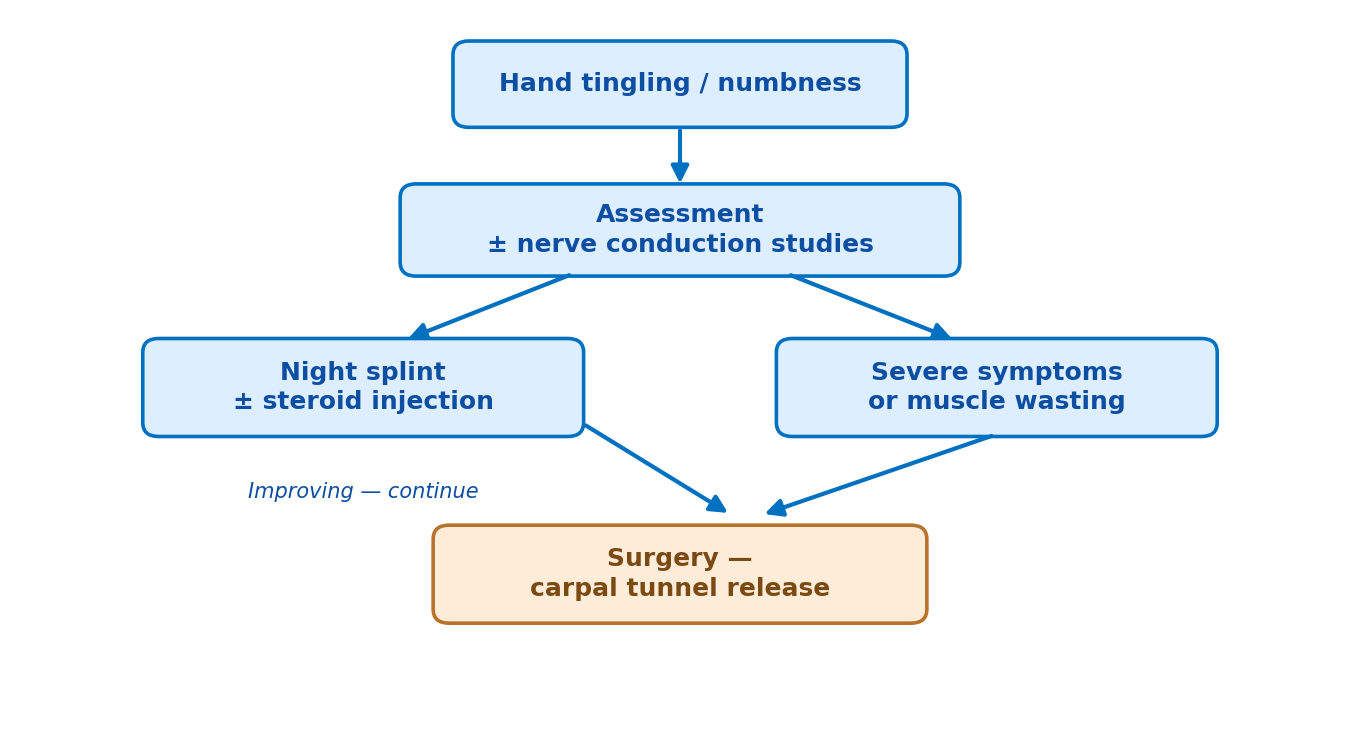
- Night Splints: worn at night to keep the wrist straight and ease the pressure
- Activity: easing repetitive gripping and wrist bending
- Injections: steroid into the tunnel to reduce swelling and settle symptoms
- Reassurance: mild and pregnancy-related cases often settle in time
Plan B — Surgical
Considered when…
- Persistent Symptoms: despite appropriate non-surgical care
- Daily Life: symptoms disturb sleep and limit daily activities
- Severe Compression: constant numbness or weakness is present
- Muscle Wasting: the thumb muscles are thinning — treat promptly
- Approach: a small day-case release of the ligament
- The Procedure: known as Carpal Tunnel Release, this operation divides the transverse carpal ligament to make more room for the nerve, usually under local anaesthetic. A separate leaflet will be provided for the surgery.
Management Pathway
Red Flags — When to Seek Urgent Help
Rapidly worsening numbness, or wasting and weakness of the thumb muscles — seek prompt assessment, as delay can cause permanent nerve damage.
If you experience any of the above, contact the practice, your GP, NHS 111, or attend your nearest Emergency Department.
Important Things to Remember
- Carpal tunnel syndrome is very common
- Many cases settle without surgery
- Splints and injections often help early on
- Doing nothing is always an option
Questions You May Wish to Ask
- What treatments should I try first?
- How long should I try them for?
- What improvement can I expect?
- What happens if I don't have surgery?
Book or Enquire Directly at Each Site
| LIPS Healthcare London | 0203 870 9996 | singh.admin@lips.org.uk |
| Spire Alexandra Chatham | 01634 662866 | alexandraselfpaypsc@spirehealthcare.com |
| Practice Plus Gillingham | 01634 969045 | Private.gillingham@practiceplusgroup.com |